


A retrospective audit of the DermScreen workflow process suggests the approach could expedite in-person review, helping to make the most of Australia’s limited dermatology resources.
Melanomas and other kinds of skin cancers are a significant challenge for the Australian healthcare landscape. Identifying cancers early offers significant benefits, but widespread screening programs are not possible due to the nation’s limited dermatology workforce.
Digital medicine services, such as DermScreen, aim to improve screening processes and rates by broadening access to total body photography that is then reviewed by a dermatologist to assess potential cancer risk. While DermScreen has been operational since 2023, it is unknown whether the service reduces wait times, can suitably identify patients who require further review and treatment, and is accurate at flagging malignant lesions.
“This audit suggests that DermScreen may support efficient allocation of dermatology resources, with most episodes managed without in-person review and higher-risk presentations prioritised for earlier assessment and high-yield biopsy,” the researchers wrote in the Australasian Journal of Dermatology.
Data from 1577 episodes of care for 1448 patients were included in the audit. The patients included in the audit had an average age of 49.4 years; 55.6% of the cohort were female. One hundred randomly selected non-DermScreen patients were used as a comparison group when wait times were compared.
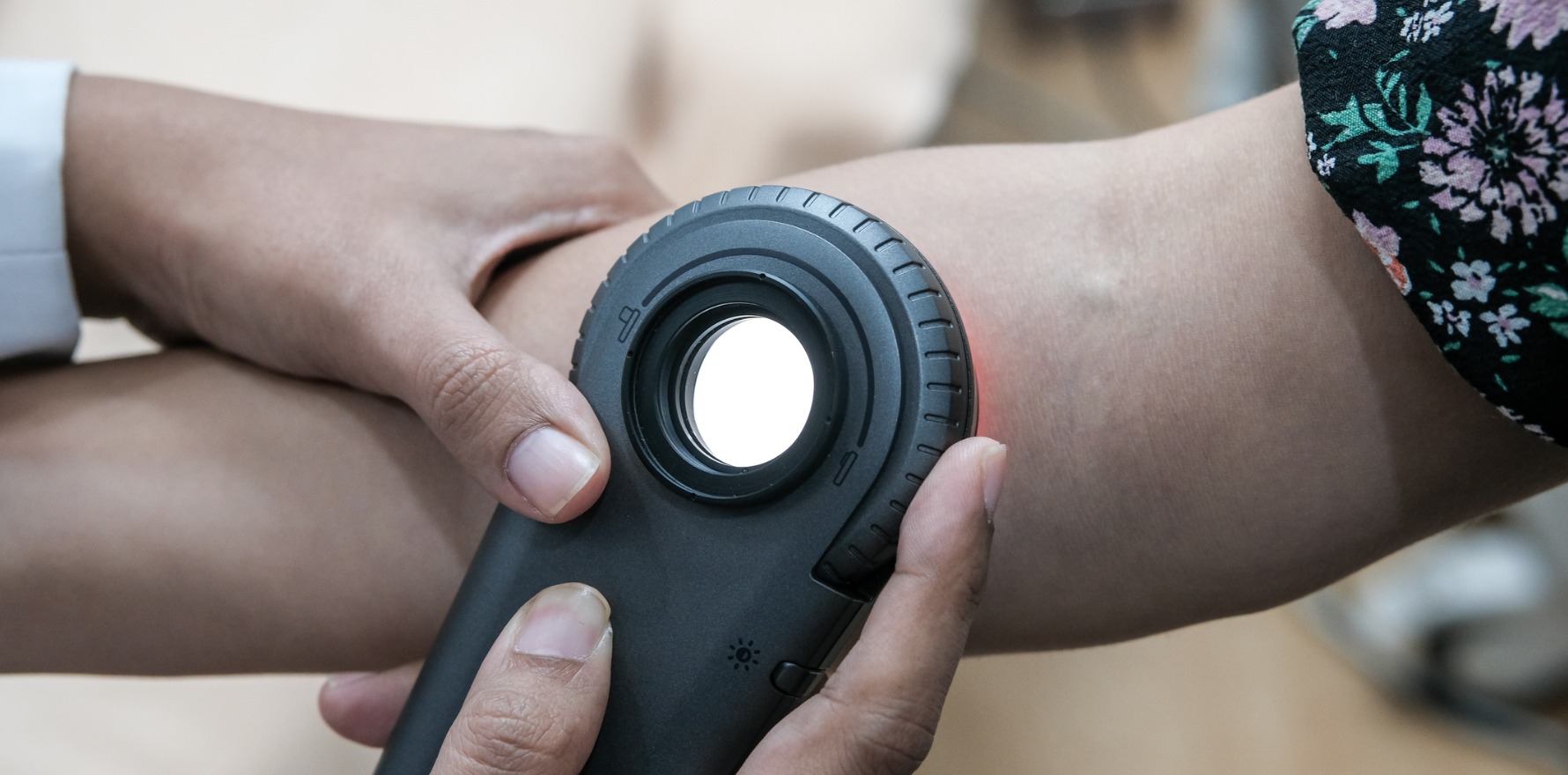
The DermScreen process involves an examination and total body photography undertaken by a nurse.
The images are then viewed by a dermatologist, who flags each lesion as either green (benign), orange (monitor), or red (flagged for in-person review). A summary report of the lesions is provided to the patients and their GP, and patients with red-coded lesions are contacted to arrange an urgent in-person review with a dermatologist or GP.
Patients who used the DermScreen service had a shorter median wait time between their imaging session and their first contact with a dermatologist (median [interquartile range] 26.0 [11.0-48.0] days) compared to the wait time between booking an appointment and seeing a dermatologist for non-DermScreen patients (37.5 [25.9-49.2] days).
DermScreen patients who had at least one red lesion were seen sooner than patients without a red lesion (22.0 [11.0-41.0] days versus 49.0 [13.0-90.0] days).
Related


“These findings suggest that the service supports risk-based prioritisation of access to in-person review. However, this comparison should be interpreted cautiously because it was observational, the pathways were not directly equivalent, and differences in case mix, referral urgency, and booking behaviour may have contributed to the observed effect,” the researchers noted.
Fewer than one in three DermScreen episodes of care (481/1577, 30.5%) resulted in a dermatologist review and/or biopsy. There were 192 biopsies recorded, with 113 (58.9%) samples displaying a malignant histology.
The odds of a malignant lesion increased with each red-coded lesion (odds ratio and 95% confidence interval 1.66, 1.37-2.00) but decreased slightly with each green-coded lesion (OR 0.88, 0.83-0.95).
The researchers said their finding that approximately 70% of episodes did not proceed to an in-person dermatologist assessment meant that DermScreen could reduce the demand on specialist appointments through case prioritisation.
“There may also be downstream cost implications for patients and the health system, particularly if DermScreen reduces the need for specialist consultations and some primary care referral visits. However, no formal economic evaluation was performed, so conclusions regarding cost-effectiveness remain speculative,” they wrote.
“Prospective comparative studies with patient-level follow-up, interval cancer capture, and formal health-economic evaluation are needed to clarify the value of this model.”
The study was limited by its retrospective design and a lack of a randomised comparator group. Three members of the research team also declared conflicts of interest as they were employed by DermScreen (two dermatologists, one medical director).
