


A more meaningful way to differentiate sensitive laundry detergents.
While many detergents are positioned as “sensitive,” not all perform equally when assessed for their biological impact on skin.
For dermatologists advising patients with eczema, dermatitis, or sensitive skin, tools that differentiate detergent mildness beyond basic claims are increasingly relevant.
What is the Detergent Mildness Index (DMI)?
DMI combines three complementary laboratory tests aligned with dermatological endpoints:1
- Protein interaction (zein test) – damage to skin protein structure
- Barrier interaction (corneosurfametry) – effects on the stratum corneum
- Inflammatory response (cytokine testing) – pro-inflammatory potential
Together, these measures provide a holistic representation of how skin interacts with detergent residues.
Clinical relevance
For dermatologists, the DMI aligns with the mechanisms that underlie sensitive skin, helping distinguish products that may appear similar based on ingredient lists or marketing claims. Given detergent exposure is daily and cumulative, even small differences in mildness may be clinically meaningful over time.
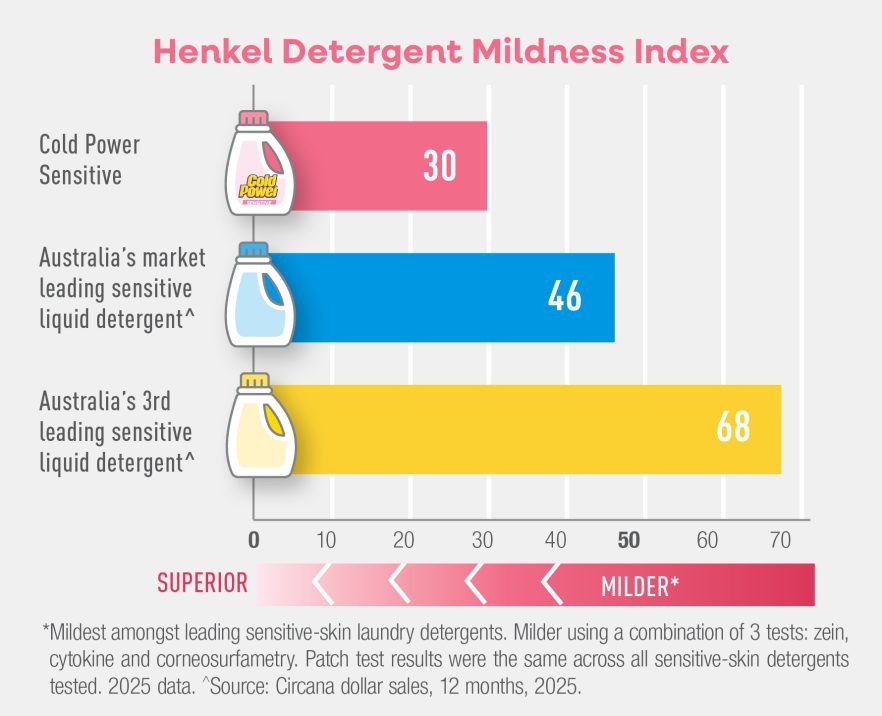
Using DMI testing, Cold Power Sensitive laundry liquid achieved the lowest (mildest) score compared with six other top-selling sensitive detergents in Australia.
This reflects avoidance of ingredients with significant irritation potential including reduced anionic surfactants, resulting in less protein damage, reduced barrier disruption, and lower inflammatory potential, without compromising on stain removal performance.2
Click here to watch dermatologist Dr John Sullivan explain why an evidence-based detergent matters.
References 1. Fowler JF Jr et al. J Drugs Dermatol. 2017;16(12):1235–123. 2. Henkel. Data on File.
© 2026. Henkel. Date of preparation: January 2026.
