

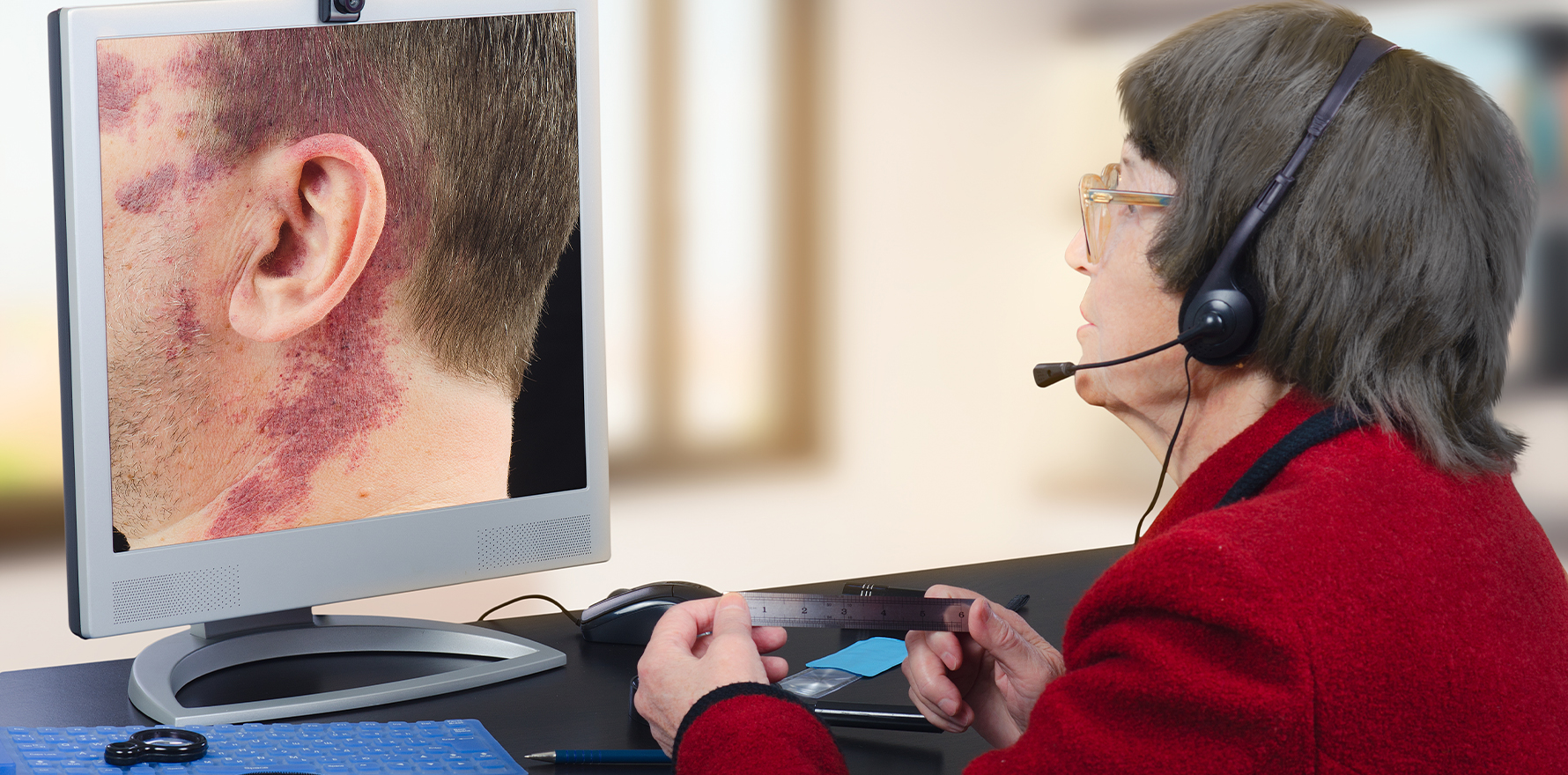
Australian services could improve access to specialist care by focusing on image quality, referral pathways, and hybrid models rather than new technology, a major international review suggests.
As Australia grapples with long dermatology waiting lists and persistent specialist shortages outside major cities, new research suggests the success of teledermatology depends more on getting the fundamentals right than having sophisticated technology.
A review of 100 teledermatology services has found high-quality clinical images, comprehensive referral templates, and flexible models of care were the factors most consistently associated with successful implementation and long-term sustainability.
The findings are particularly relevant in Australia, where teledermatology has become an increasingly important way of connecting patients in rural and regional communities with specialist care. However, uptake remains uneven across health services despite widespread acceptance of telehealth since the covid-19 pandemic.
Published in the Australasian Journal of Dermatology, the review analysed teledermatology services operating between 2020 and 2025 and identified 45 factors contributing to successful implementation, grouped into eight themes spanning technology, communication, staffing, funding, education, and service design.
“Teledermatology offers a way to provide specialist dermatological care to a patient at a distance using information and communications technology,” the researchers wrote.
“Common examples of teledermatology include real-time video or phone consultations between a patient and a dermatologist or other health professional (e.g., primary care) and dermatologist, or store-and-forward of an image captured by a patient or primary care and sent asynchronously to a dermatologist to review and diagnose, including eConsults.
“Accuracy and usefulness of teledermatology is well established; and teledermatology in Australia is well supported by professional guidelines.”
Rather than asking whether teledermatology works, the researchers set out to answer a more practical question: why do some services become embedded in routine clinical practice while others struggled to gain traction?
“These findings can be used to develop guidance on future teledermatology service implementation and optimisation,” the researchers wrote.
The review, led by researchers from The University of Queensland’s Centre for Online Health, screened 992 publications before including 100 established teledermatology services from around the world.
Most services were based in the United States or Europe, while only two Australian models met the inclusion criteria, highlighting both Australia’s contribution to the evidence base and the opportunity to further evaluate local services.
Across all eight themes, one factor stood above the rest.
High-quality clinical photography was the single most frequently cited contributor to successful teledermatology.
Thirty-six studies identified image quality as critical, with successful services typically using combinations of overview and close-up photographs, standardised imaging protocols, and regular feedback to clinicians capturing images.
Dedicated imaging staff and the routine use of dermoscopy were also associated with more efficient services and improved diagnostic confidence.
The researchers found technology itself mattered less than how well it fitted into everyday clinical workflows.
Services that integrated seamlessly with electronic medical records, automatically uploaded images, and reduced duplication of documentation were consistently described as more sustainable than those requiring additional administrative work.
Equally important was ensuring dermatologists received enough clinical information to make confident decisions remotely.
The second most commonly reported success factor overall was the use of structured referral templates.
Thirty-one studies found standardised referral forms, embedded questionnaires, and condition-specific templates reduced incomplete referrals, minimised delays, and avoided unnecessary face-to-face appointments.
By ensuring clinical histories were complete from the outset, dermatologists were less likely to need further information before providing advice.
The review also challenged the idea that teledermatology should replace conventional consultations.
Instead, the strongest evidence supported hybrid models that allowed clinicians to move between asynchronous store-and-forward consultations, video reviews, telephone calls, and in-person appointments according to each patient’s clinical needs.
Twenty-nine studies identified hybrid care as one of the strongest predictors of successful services.
Related



Teledermatology performed best when used for established chronic skin disease, lower-complexity conditions, and patients living in geographically isolated areas, while maintaining clear pathways for escalation to face-to-face care when procedures or more complex assessment were required.
For Australia, where many regional communities have limited or no resident dermatologists, the findings reinforced teledermatology’s potential to improve equity of access without attempting to replace traditional specialist clinics.
Communication also emerged as a recurring theme.
Successful services kept patients informed about waiting times, consultation processes, and follow-up arrangements while maintaining strong communication between referring clinicians and dermatologists.
Several studies highlighted the importance of providing feedback to referring GPs, helping improve future referrals, and strengthening collaboration between primary care and specialist services.
The review also found staffing frequently determined whether services flourished or failed. Dedicated teledermatology coordinators, administrative support, nurses trained in clinical photography, and organisational leadership all contributed to successful implementation.
Several services also improved efficiency by incorporating dermatology trainees into telehealth clinics, allowing consultants to supervise care while expanding service capacity.
Education extended well beyond specialist clinicians. Training GPs in dermatology, biopsy techniques, clinical photography, and telehealth workflows reduced inappropriate referrals and improved the quality of information sent to dermatologists. Patient education also proved important, with services reporting better uptake when patients understood how teledermatology worked and what to expect from remote consultations.
The researchers found successful teledermatology programs were characterised by continuous refinement rather than simply introducing new technology.
Regular evaluation, quality audits, patient feedback, clinician engagement, and iterative improvements to software and workflows all helped services demonstrate value while maintaining clinician confidence.
Promotion also mattered, with several studies finding referral numbers increased after services were actively promoted to GPs and patients rather than relying on passive awareness.
Funding, however, remained one of the few factors beyond the direct control of clinicians.
The review identified reimbursement for both dermatologists and referring clinicians as one of the strongest enablers of sustainable teledermatology, alongside broader funding certainty and long-term business planning.
The finding may resonate in Australia as policymakers continue to refine Medicare-funded telehealth arrangements and explore ways to improve specialist access in underserved communities.
The authors acknowledged several limitations, including restricting the review to PubMed and focusing only on studies published between 2020 and 2025. They also examined only successful services, meaning the factors contributing to failed teledermatology programs remain an important area for future research.
Even so, they said the review provided practical guidance for health services planning new teledermatology models.
For Australian dermatologists, health services and policymakers facing growing demand and workforce shortages, the message was straightforward. Sustainable teledermatology depended less on investing in increasingly sophisticated digital platforms than ensuring the clinical foundations were sound.
“Numerous factors across many themes such as technology, communication and staffing are reported to contribute to the success of a teledermatology service,” the researchers concluded.
“Most often stated were ensuring high-quality images and a good referral template are in place.
“While it is acknowledged some broader contexts such as the reimbursement landscape are not within an individual service’s control, organisations should consider including as many of these reported success factors as possible to ensure their teledermatology implementation results in sustainable service delivery.”
