


The country has fewer than half the dermatologists that researchers estimate are needed for adequate access to care, putting a local spotlight on global workforce shortages and maldistribution.
Australia has just 2.38 dermatologists per 100,000 people, well below a newly proposed benchmark of 5.63 per 100,000 for adequate access to comprehensive dermatological care.
The finding comes from the first systematic global assessment of access to dermatological care, published in JAMA Dermatology, which surveyed dermatology leaders across 158 countries representing 97% of the world’s population.
The Global Access to Skin Health Observatory Study was a collaboration between the International League of Dermatological Societies (ILDS) and L’Oréal Dermatological Beauty.
Those surveyed included national society leaders for ILDS member societies, or for countries without national societies, dermatology leaders identified through JAMA’s global network of collaborators and the WHO.
Dr Esther Freeman, the study’s principal investigator, vice chair of the International Foundation for Dermatology (IFD), and Associate Professor of Dermatology at Harvard Medical School said it was an important study.
“This is the first time we are turning anecdote into data we can act on,” she told Dermatology Republic.
“The Global Access to Skin Health Observatory gives us, for the first time, a truly data-driven view of what access to care looks like for the billions of people living with skin disease around the world.
“Where you live should not determine your access to skin health – but today, it does. Our job is to identify these gaps and work together as a global community to address them.”
In countries with no dermatologists, the survey was distributed to WHO country program officers. Researchers estimated there were about 175,600 dermatologists worldwide but found enormous variation in where they worked.
The average density was 2.66 dermatologists per 100,000 people, ranging from just 0.37 in low-income countries to 5.05 in high-income countries.
Australia’s figure of 2.38 per 100,000 was specifically highlighted by the authors as falling below the estimated 5.63 threshold, alongside the US at 4.47 per 100,000.
The researchers cautioned that even high-income countries did not universally have sufficient workforces, pointing to Australia and the US as examples where dermatologist density remained below the benchmark and access varied for underserved populations.
Australian dermatologist and ILDS treasurer Associate Professor Stephen Shumack said Australia’s figure of 2.38 dermatologists per 100,000 should not be interpreted in isolation.
“Much of Australian dermatology is appropriately delivered in general practice,” he told Dermatology Republic.
“Our greater challenge is maldistribution: the dermatologist who is available in inner Sydney, Melbourne, or Brisbane does little to improve access for a patient hundreds of kilometres away.
“For Australia, where dermatologists work, how quickly patients can see them, and how effectively specialists support primary care may be more important measures than achieving a particular national headcount.”
Overall, 42% of surveyed countries reported inadequate or extremely poor access to general dermatological care, while 48% reported inadequate or extremely poor access to specialist dermatological care.
“Based on countries reporting sufficient access to general and specialty dermatological care, we present an updated estimate of at least 5.63 dermatologists per 100,000 to deliver adequate care,” the researchers wrote.
“Only 17% of countries achieved this value, with 70% from the European region. Notably, countries above the threshold were more likely to have governments prioritising dermatological care. HICs do not universally meet this bar. For example, the US (4.47 per 100,000) and Australia (2.38 per 100,000) are below this value, with varied access to care for underserved populations.”
The Australian relevance extended beyond raw workforce numbers – a trend which was seen in other countries.
The study found dermatologists were heavily concentrated in cities worldwide, with an average 79% working in urban areas. Even in high-income countries, the figure was 74%.
The researchers described these geographic gaps as “dermatological deserts” and reported that more than half of high-income countries considered their dermatologist workforce insufficient.
Another potential pressure on access was the movement of dermatologists towards cosmetic practice. Almost half of countries surveyed reported access problems associated with dermatologists transitioning primarily to cosmetics, rising to 59% of high-income countries.
Primary care also emerged as a crucial part of the dermatology workforce. Across income groups, GPs and other primary care physicians were reported almost as frequently as dermatologists as the clinicians primarily responsible for diagnosing and treating skin disease.
The researchers said skin diseases were already a leading reason for primary care and paediatric visits but noted there was no standardised dermatology training for non-dermatologist healthcare workers, with some receiving only hours or days of education.
They said that appropriately shifting some diagnostic and management responsibilities to frontline clinicians could expand access.
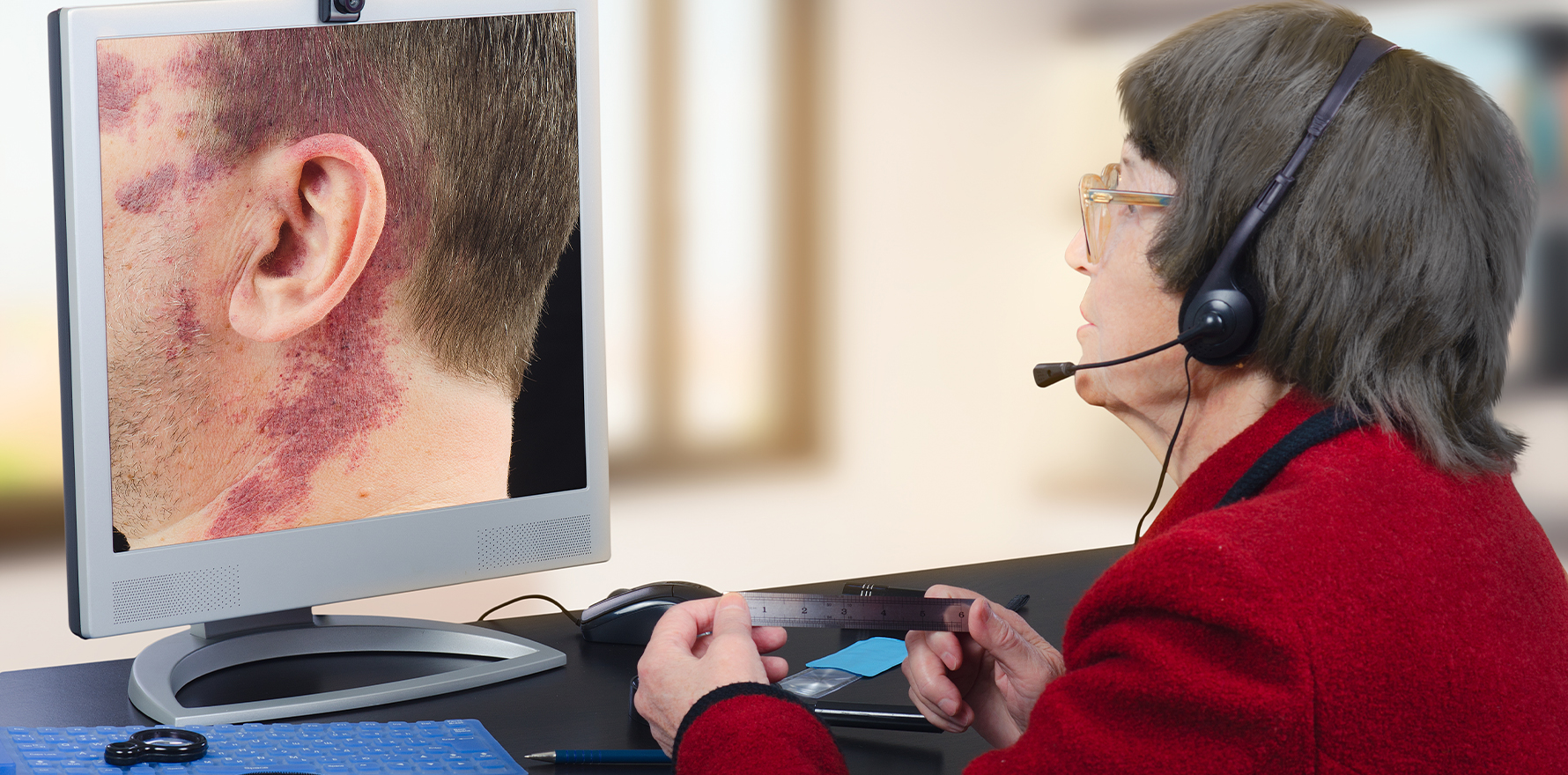
“Digital technologies and artificial intelligence (AI) can potentially improve access to care through teledermatology platforms, educational and decision-support tools, and online training,” the researchers wrote.
“Teledermatology can overcome geographic and logistical barriers and reduce treatment delays.
“However, availability and uptake are limited by infrastructure, disparities in technology access, regulatory challenges, and privacy concerns.”
The study included Australian dermatologist and past president of the Australasian College of Dermatologists Associate Professor Adriene Lee, also from St Vincent’s Hospital and the University of Melbourne, among its international authors.
In her time as president she was vocal about the dermatology workforce challenge facing Australia, as previous presidents have been before her.
“I acknowledges it’s a challenge with many specialties, but I think acutely we feel it more than most,” she told Dermatology Republic in 2023.
“I was looking at the figures and really 94% of our fellows or our members practice in metropolitan areas.
“So that’s only 6% who are currently working in regional or rural and remote areas. And if we boil that down further, 50% of the overall workforce is actually over 60 years. So there’s a lot of impending retirement that we also have to factor in too.”
Professor Shumack said the 5.63 figure was a useful international benchmark, but it is not “a magic number or a one-size-fits-all target for Australia”.
“Different health systems distribute work very differently between dermatologists, GPs, paediatricians, and other healthcare professionals,” he told DR.
“For Australia I think the more meaningful measures are dermatologist clinical full-time equivalent rather than simple headcount; geographic distribution; availability of public as well as private dermatology; waiting times for clinically necessary referrals; distance patients must travel; affordability; and whether patients with serious skin disease receive appropriate specialist care within an appropriate time.”
Dr Freeman said a country could theoretically have five or six dermatologists per 100,000 and still have poor access if almost all were concentrated in major cities or predominantly provided private care.
“Conversely, a country with a lower dermatologist density may deliver quite effective care if it has strong general practice, good referral systems, and readily accessible specialist support,” she said.
“Headcount tells us how many dermatologists exist; access tells us whether patients can actually benefit from them.”
She said it would be better to concentrate on a package of measures, including increasing funded dermatology training and supervisory positions; developing more regional training pathways; increasing substantive public-hospital dermatologist positions, particularly outside capital cities; strengthening visiting and outreach services; expanding GP dermatology education; and making teledermatology and e-consultation a routine component of specialist services rather than an occasional add-on.
“We need to build a bridge between primary care and specialist dermatology, not simply add more people at one end of the system,” said Dr Freeman.
Related


The researchers acknowledged a number of limitations, including the fact that national dermatology leaders may have lacked access to verified statistics on their country’s workforce, with some respondents necessarily estimating numbers of dermatologists.
To account for this, respondents indicated certainty levels and data sources.
“While more than 80% of respondents indicated they were very certain or certain of their responses overall, and the majority noted their response was informed by data, one-third of respondents indicated their number of dermatologists was an estimate or guess,” the researchers wrote.
“We did not serially repeat in-country survey measures and therefore could not quantitatively estimate the reporting error in country-level survey response.
“The survey was limited to key informants and does not reflect patient experience. While 158 countries completed the survey, not all completed every question. The survey was only available in four languages, potentially limiting participation. Due to the survey’s broad reach, some questions may have been interpreted differently based on country context.”
However, they concluded that improving access would require more dermatologists and other health professionals trained to manage skin disease, incentives to practise in rural and underserved areas, and greater investment in frontline practitioners.
For Australia, the findings suggest that simply being a high-income country does not guarantee adequate dermatology capacity – and that workforce distribution, GP capability and alternative models of care may be as important as the headline number of specialists.
ILDS president Professor Henry W. Lim said the study findings supported the implementation of the World Health Assembly Resolution on Skin Diseases as a Global Public Health Priority.
“The Study will continue to grow, with data added over time, helping us track progress and support long-term change,” Professor Lim said.
“With skin diseases among the top ten leading causes of disability worldwide, we invite all stakeholders to work with us to turn this vital knowledge into positive outcomes for those living with skin diseases.”
Professor Shumack said the solutions should not focus only on dermatologist numbers.
“We also need to strengthen the skills and referral pathways of the broader workforce already caring for patients with skin disease,” he said.
“In Australia, that means better dermatology education for GPs, dermoscopy and skin-cancer training, clear referral pathways, ready access to specialist advice, and routine use of teledermatology or e-consult services where appropriate.
“In many cases, the most efficient use of a dermatologist is not necessarily to see every patient face-to-face, but to help primary-care clinicians manage the right patients locally while ensuring rapid referral for those who genuinely need specialist care.
“The goal is not for every skin problem to reach a dermatologist. It is for every patient to reach the right level of care.”
