


Australian researchers have found that commonly used melanoma risk prediction tools can identify people at higher risk, but most underestimate their actual chances of developing the disease.
Most melanoma risk prediction models underestimate the likelihood of developing the disease, raising questions about their accuracy as Australia moves towards targeted skin cancer screening.
A large Australian study published in JAMA Dermatology found that while several widely used models could moderately distinguish between people who would and would not develop melanoma, most underestimated absolute risk.
Led by Professor Anne Cust, director of The Daffodil Centre and team lead in melanoma and skin cancer, researchers from the University of Sydney, Cancer Council NSW and Melanoma Institute Australia independently evaluated six published melanoma risk prediction models using data from up to 43,235 participants in the Sax Institute’s 45 and Up Study.
“There is currently limited evidence to guide decisions as to which models or tools are the most accurate or clinically useful, and this may vary between different contexts and populations,” the researchers wrote.
“The performance of risk prediction models is best assessed in datasets independent from those used for their development, known as external validation.”
The analysis included 946 invasive melanomas and 1406 melanoma in situ diagnoses, with cancer registry data providing more than a decade of follow-up.
The researchers assessed how accurately each model distinguished between individuals who developed melanoma and those who did not, and how closely predicted risks matched actual diagnoses.
Five of the six models demonstrated moderate discriminatory performance, with area under the receiver operating characteristic curve (AUC) values ranging from 0.66 to 0.70. The sixth performed considerably worse, with an AUC of 0.58.
An AUC of 0.5 indicated performance no better than chance, while 1.0 represented perfect discrimination.
The Australian-developed Vuong model and the Olsen model incorporating both invasive and in situ melanoma performed best, each achieving an AUC of 0.70.
The Whiteman model, published in 2025, and the Olsen invasive melanoma model followed closely at 0.69, while the US-developed Cho model achieved 0.66.
The French-developed Quéreux model performed worst, recording an AUC of 0.58 compared with 0.73 in its original development study.
However, the researchers found that the ability to distinguish between higher-risk and lower-risk individuals did not necessarily translate into accurate estimates of absolute melanoma risk.
Four of the five models assessed for calibration underestimated the number of melanomas diagnosed in the cohort.
The Olsen model incorporating both invasive and in situ melanoma demonstrated the best calibration, although it slightly underestimated risk among lower-risk participants and overestimated it among those at highest risk.
The researchers said the findings supported the potential use of several models to guide melanoma prevention and early detection but highlighted the need to improve their accuracy before broader implementation.
“Several prediction models demonstrated moderate discriminatory performance comparable to their original studies, supporting their potential use for risk stratification to guide prevention and early detection strategies,” the researchers wrote.
“Some recalibration may be needed to improve estimation of absolute risks at the population level.”
The study also highlighted the importance of evaluating prediction tools in populations independent of those used to develop them. Four of the six models were developed using Australian data, while the remaining two originated in France and the US.
The researchers suggested that the stronger performance of Australian-developed models could reflect similarities in ancestry, ultraviolet radiation exposure, sun protection practices, and skin-checking behaviours.
They also identified several factors that could explain why most models underestimated melanoma risk.
Participants in the 45 and Up Study reported higher rates of clinical skin checks than those in a nationally representative survey, at 44% compared with 37% among people aged 45-69 years.
More frequent skin examinations could increase melanoma detection, particularly for melanoma in situ and thin invasive melanomas, potentially contributing to the discrepancy between predicted and observed cases.
Missing information on several risk factors, including hair colour, sunbed use, and sunburn history, may also have affected model performance.
The researchers acknowledged that some risk factors were collected during a 2020 follow-up survey, after melanoma diagnoses had occurred, potentially introducing bias. They also cautioned that the findings might not be generalisable to all population subgroups.
Related


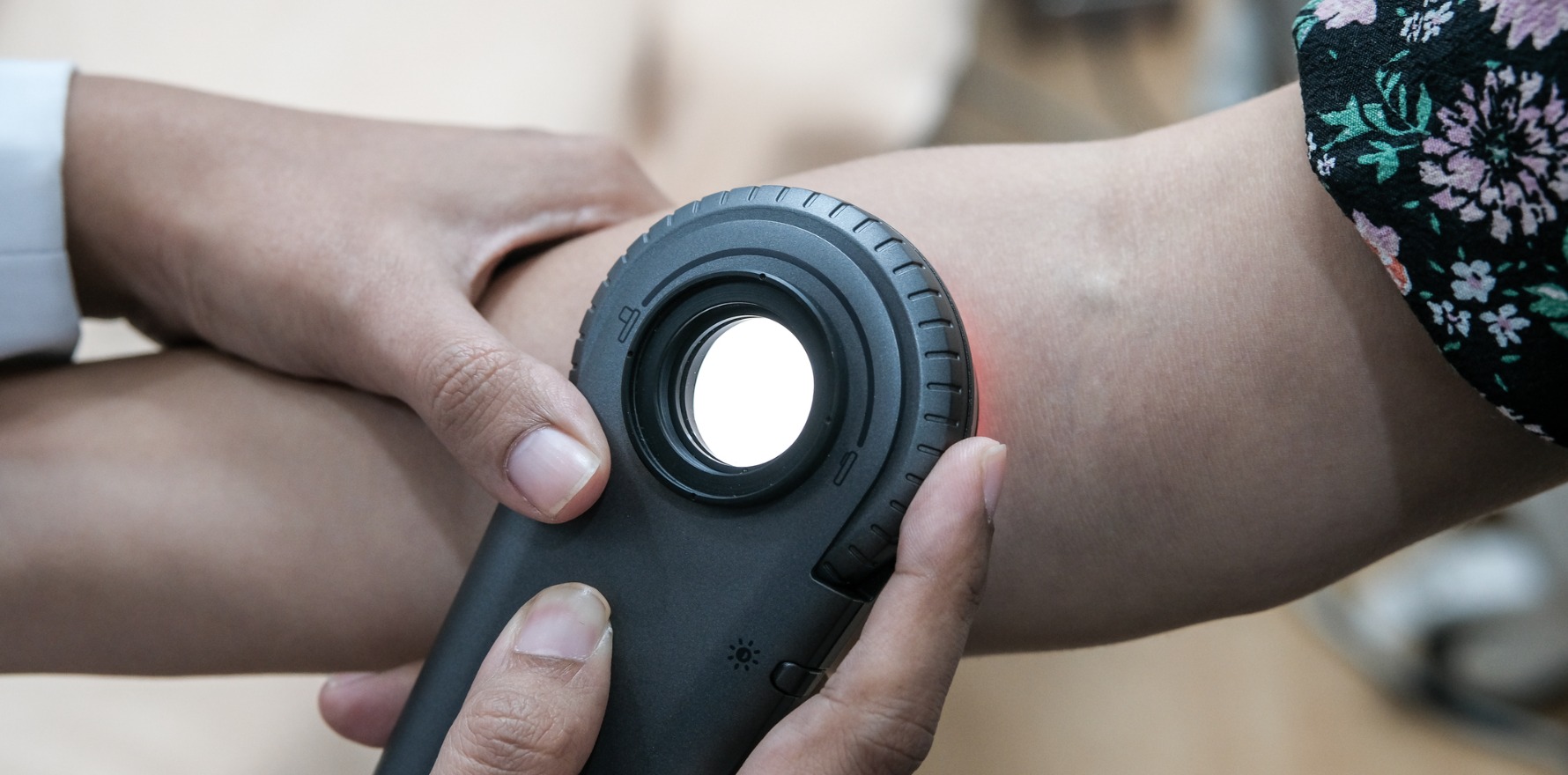
Despite the promising results, the authors identified significant barriers to incorporating melanoma risk prediction tools into routine clinical practice.
These included a lack of standardised definitions, agreed risk thresholds and evidence-based protocols for tailoring screening and management to individual risk.
The researchers noted that there was currently no consensus on the level of absolute or relative melanoma risk that should trigger particular interventions.
This could prove particularly important as Australia considers a national targeted melanoma screening program.
Risk-based screening would aim to identify people most likely to benefit from regular skin examinations, potentially improving early detection while limiting unnecessary screening among lower-risk individuals.
“This independent evaluation of predictive performance identified several melanoma risk prediction models with moderate discriminatory performance largely comparable to their original studies, highlighting their potential use in risk stratification to guide prevention and early detection strategies,” the researchers wrote.
“Some recalibration may be needed to improve estimation of absolute risks at the population level.
“Further research should focus on validation in diverse population subgroups and incorporating emerging risk factors to enhance melanoma risk prediction.”
