

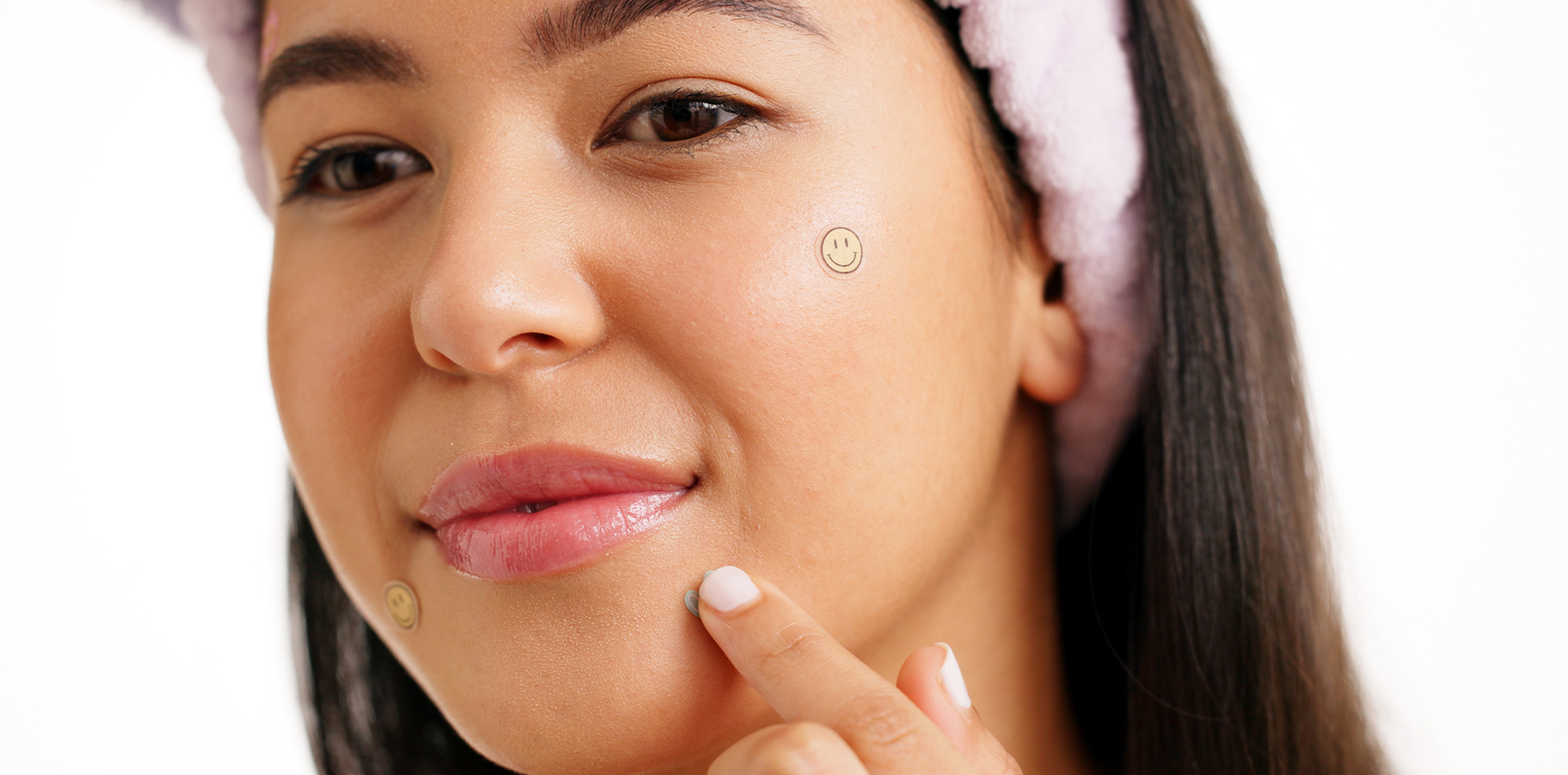
Initial results show promise but the lack of blinded clinical trials has hindered more definitive results.
You’re standing in the skincare aisle and pimple patches are everywhere – clear ones, flesh-coloured ones, stars, hearts. They promise to flatten a pimple overnight.
Then there are those satisfying social media videos where someone peels off a pimple patch to reveal a much calmer-looking pimple underneath.
But do pimple patches actually work? And what are they really doing to your skin?
What’s a pimple?
A pimple forms when a hair follicle gets clogged with oil, dead skin cells and bacteria, causing inflammation, redness and sometimes a pus-filled head. You might also hear a pimple called a “spot” or a “zit” – these are just names for the same thing.
“Acne” is the name for the broader skin condition of getting pimples recurrently (along with blackheads and whiteheads), rather than a word for a single pimple.
In this article we’ll mostly stick to “pimple” for an individual lesion, and use “acne” only when we’re talking about the overall condition.
Pimples affect an estimated 20.5% of people worldwide at any one time, and up to 80–85% of adolescents. This makes it one of the most common skin conditions.
What are pimple patches?
Pimple patches look like a TikTok-era invention, but the underlying technology isn’t. They’re based on hydrocolloid dressings, which were developed decades ago for wound care. Then dermatologists began adapting them for skin conditions, such as acne.
Hydrocolloid patches caught on as a beauty product in South Korea almost 20 years ago before crossing into Western markets around 2012.
Today’s pimple patches are made from a hydrocolloid material – a gel-forming substance – which is often a blend of ingredients such as pectin, gelatin and carboxymethylcellulose. This bonds to a thin, flexible, waterproof outer layer.
The hydrocolloid absorbs moisture, so it can soak up fluid from a wound and hold it in place while the skin underneath heals.
On a pimple, the same process kicks in. Press the patch over a pimple with a visible head, and the hydrocolloid layer starts drawing fluid – pus, oil and dead skin cells – out of the pore and locking it into its gel matrix.
As the patch fills up, it turns white or cloudy, which is exactly what people are peeling off in those satisfying videos. The outer layer holds everything in place and keeps the area covered while this happens.
Pimple patches also act as a physical barrier. They cover the pimple, making it harder to pick, squeeze or touch it, which can otherwise introduce more bacteria and worsen the inflammation.
Some pimple patches are medicated, most commonly with salicylic acid. Others contain tea tree oil, niacinamide or benzoyl peroxide. Rather than simply drying out the pimple, these ingredients are meant to help exfoliate the skin, calm inflammation or target acne-causing bacteria.
You can buy pimple patches at supermarkets or pharmacies, typically for about A$6–20 a pack, depending on the brand and whether they’re medicated (medicated patches typically cost more than unmedicated ones).
Skincare isn’t always a case of ‘the stronger the better’. Getting the right advice helps make sure you find the best treatment for your skin.
— The Conversation AUNZ (@aunz.theconversation.com) 31 July 2026 at 02:10
[image or embed]
Do they actually work?
A 2025 review found most evidence for hydrocolloid patches comes from wound care, not for pimples specifically.
Of the handful of studies on pimples, many are small and industry-funded that test the brands’ own patches. Often these studies are not “blinded”. This means either the researchers, participants or both knew if they were using pimple patches, which risks skewing the results.
So while the early results are promising, the evidence for pimple patches is still limited.
One manufacturer-funded trial of 41 people found applying a patch to a pimple that had already come to a head and been popped improved its appearance in a day.
Another small industry-funded study followed 37 people over ten days. In two days, pimples covered with the patches were 35% smaller and looked 44% less less inflamed, based on a combined visual assessment of size and redness. Untreated pimples showed little change. By day ten, the treated pimples were also less likely to develop post-inflammatory pigmentation (dark marks on your skin after a pimple heals).
Patches seem to work best on pimples that already have a visible white or yellow head. That’s because the pus sitting inside has already risen close to the skin’s surface, putting it within reach of the patch’s absorbent gel.
For the best results, apply to clean, dry skin and leave on for six to eight hours or overnight, swapping it once it turns cloudy and swollen. Afterwards, place your pimple patch in the bin.
Are they for me?
Pimple patches can be handy for the odd pimple. But they can only do so much, and they’re not for every pimple.
They don’t work well for deep, painful cystic pimples because the patch can’t reach inflammation that sits deeper in the skin.
People with darker skin tones may also need to be careful, as irritation can increase the risk of dark marks after a pimple heals. This can happen with any skin tone, but skin with more melanin tends to produce more pigment in response to inflammation or irritation, so the resulting dark marks are often more noticeable and slower to fade.
If you have sensitive skin or an allergy to adhesives, patches can cause redness, itching or a rash. Medicated patches containing ingredients such as salicylic acid can also be irritating.
My pimples aren’t getting better
If you’ve tried patches, cleansers and treatments for a few weeks and your pimples aren’t budging, it’s probably time to get some help. Likewise, if your pimples are deep, painful or starting to leave scars, don’t wait.
A GP can discuss your options, and if needed, refer you to a dermatologist to work out what’s driving your pimples and find a treatment.
Lisa Byrom, Associate Professor, Dermatology, School of Medicine, The University of Queensland
This article is republished from The Conversation under a Creative Commons licence. Read the original article.
