

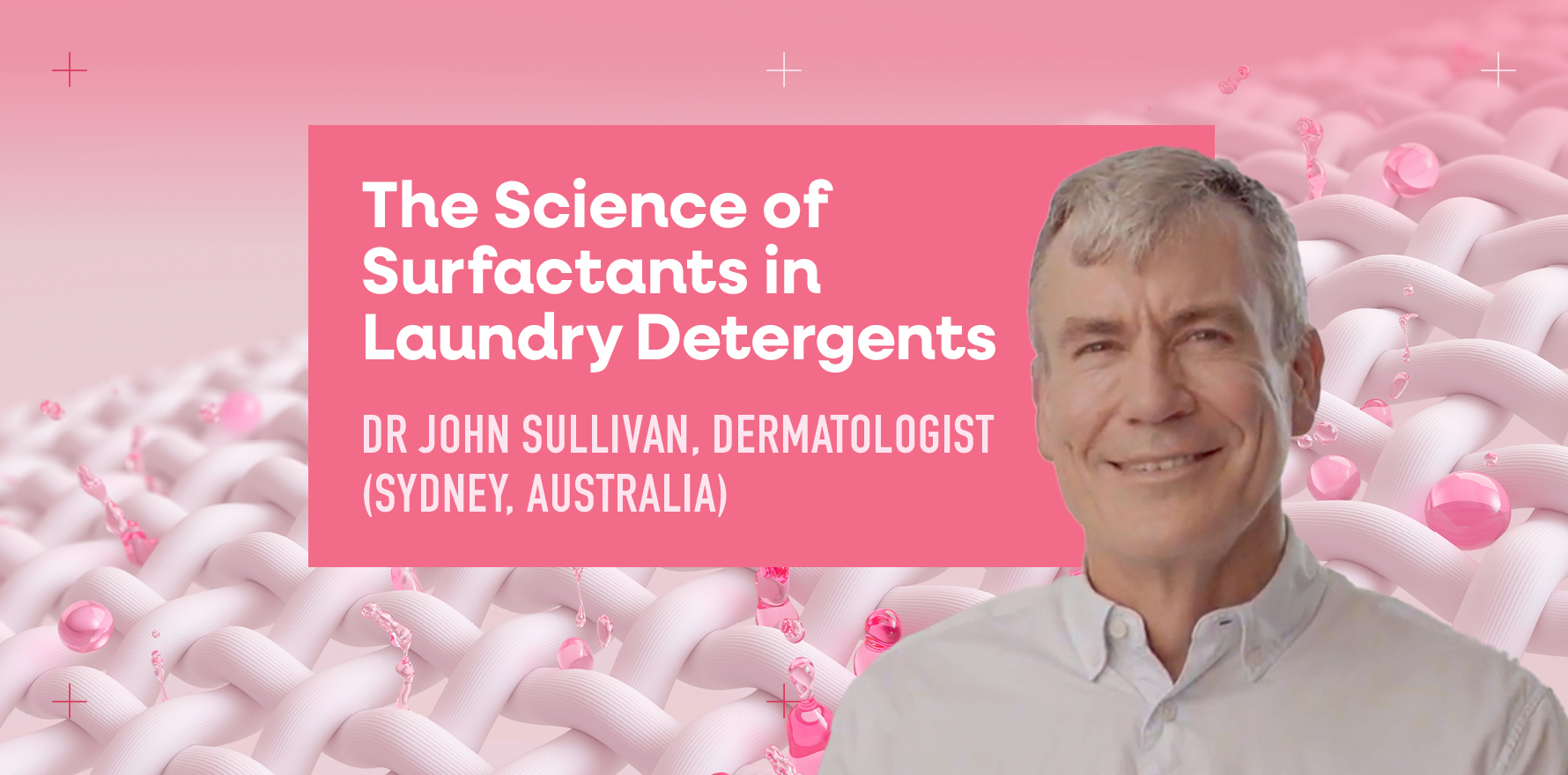
Why ingredient composition matters for sensitive skin management.
Skin sensitivity is driven by cumulative irritation rather than single exposure.
While skincare products are routinely assessed, laundry detergents are often overlooked despite daily, prolonged contact with the skin. For patients with eczema, dermatitis, or sensitive skin, detergent ingredients – particularly surfactant systems – can meaningfully influence skin barrier integrity and inflammation.1
Detergents as a source of cumulative irritation
Skin is exposed to laundry detergents daily, and even with modern machines and double-rinse cycles, approximately 2.5% of detergent residue remains on fabrics.2,3 This residue can be transferred to the skin via friction, warmth, sweat, and moisture, contributing to ongoing irritation. Residual components may include surfactants, fragrances, dyes, enzymes, preservatives, and optical brighteners.2,3 Reducing avoidable daily irritant exposure is therefore a practical component of long-term management of sensitive skin.
Evaluating detergents: what matters clinically
Beyond ingredient exclusion (e.g. fragrance free, dye-free), detergents should be assessed by their biological impact on skin. From a dermatological perspective, three key domains are relevant:4
- Protein structure integrity
- Stratum corneum (barrier) integrity
- Skin inflammation
Products that disrupt these pathways may irritate skin despite appearing “mild”.4
Surfactants and skin compatibility
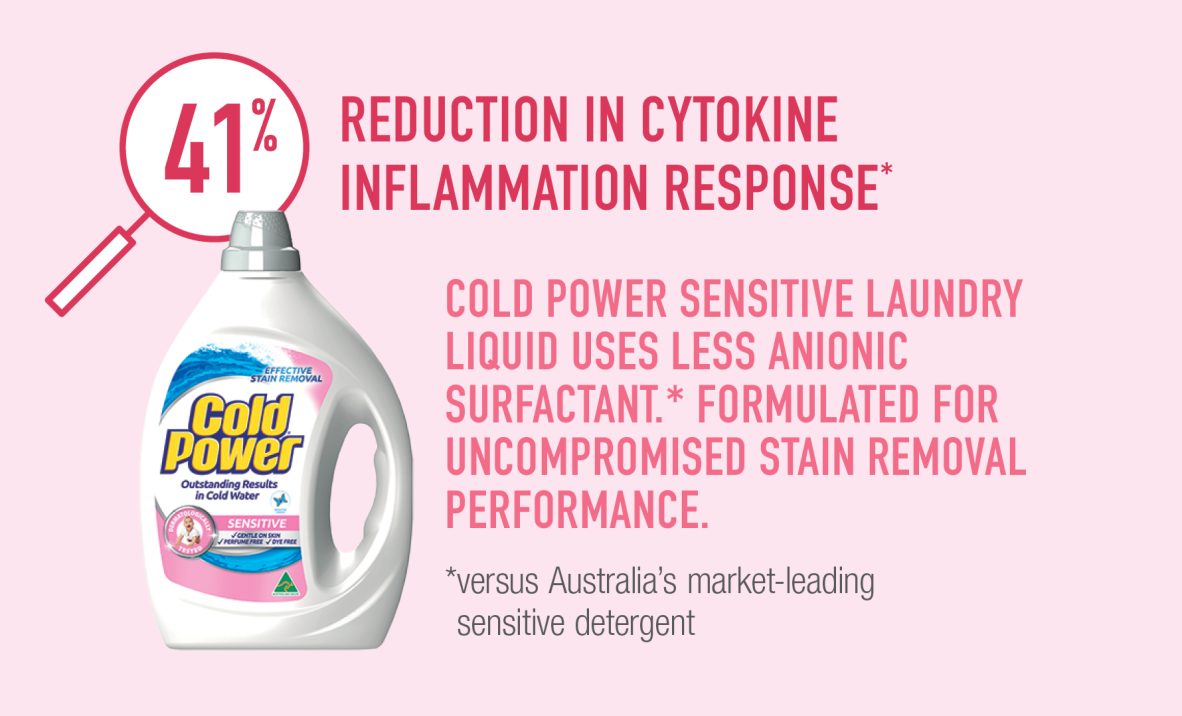
Surfactants enable removal of dirt and oils but vary widely in irritancy potential. Anionic surfactants are the most clinically relevant, as they are more likely to leave a residue and have a higher potential for irritation.³
The importance of surfactant balance
Optimal detergent formulation balances cleaning efficacy with skin tolerability. This is achieved by blending anionic surfactants with nonionic surfactants, which:3–5
- Moderate surfactant harshness
- Reduce protein and barrier damage
- Lower inflammatory potential
- Maintain effective cleaning
A balanced surfactant system is therefore central to management of sensitive skin.3,5,6
Click here to watch dermatologist Dr John Sullivan explain why an evidence-based detergent matters.
References: 1. Wright BL et al. Curr Allergy Asthma Rep. 2023;23(8):443–51. 2. Kwon S et al. J Toxicol Environ Health A. 2009;72(21-22):1369–79. 3. Crawford C, Zirwas MJ. Skinmed. 2014;12(1):23–31. 4. Fowler JF Jr et al. J Drugs Dermatol. 2017;16(12):1235–123. 5. Hall-Manning TJ et al. Food Chem Toxicol. 1998;36(3):233–8. 6. Abdollahi H et al. Colloids Surf B Biointerfaces. 2025;256(Pt 1):115026.
© 2026. Henkel. Date of preparation: Janua
